

This blog covers:
- Listedness and labelling
- How these concepts help determine causality
- The key difference in with causality
Table of Contents
Introduction
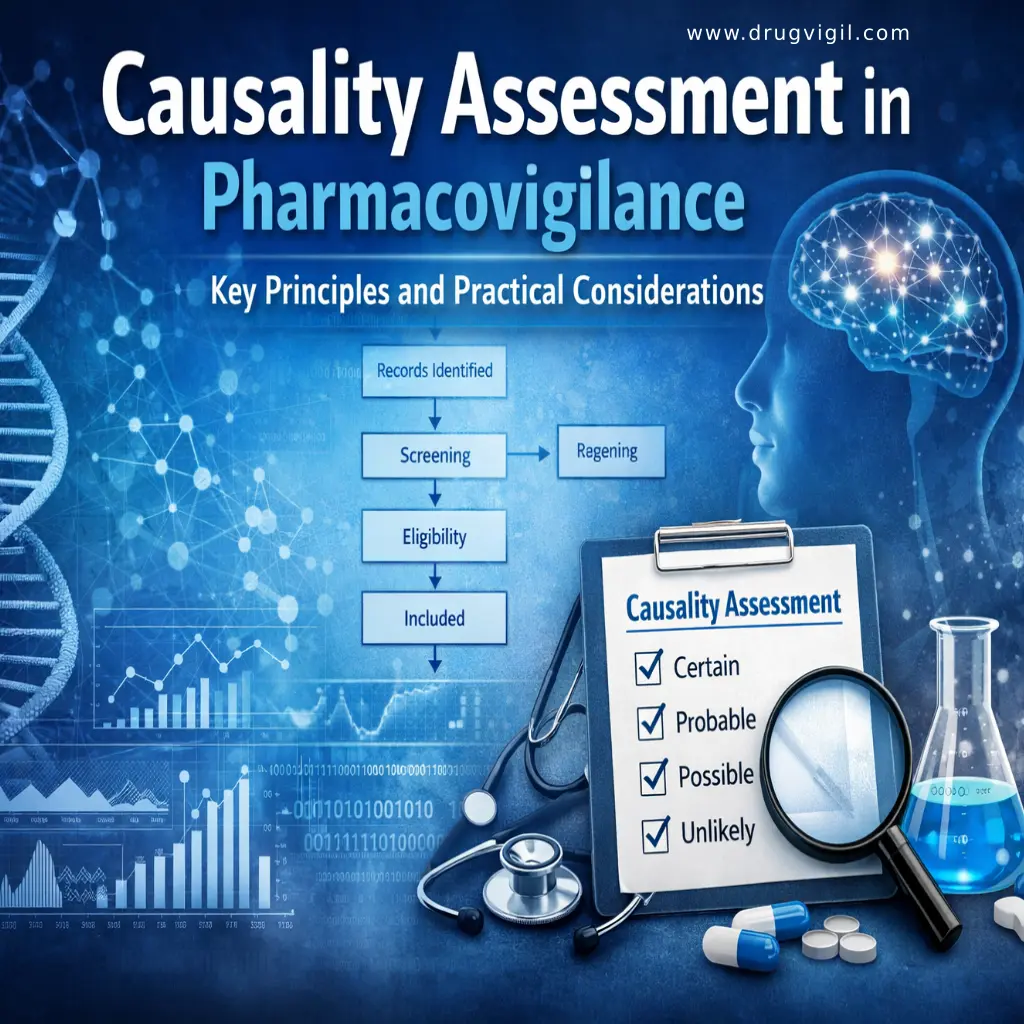
This blog focuses on the processes involved in conducting causality assessments.
You will learn about the distinctions between two terms in this context: listedness and labelling, along with their interconnections.
Listedness
Listedness refers to the recorded terms derived from pre-clinical study data. In which encompass monitored and documented events related to the drug’s effects.
For example,
Listed: If an adverse reaction is well documented in the RSI, it is classified as listed.
Unlisted: Conversely, unlisted terms are those not found in the Reference Safety Information (RSI).
“Labelling and listedness serve as vital cornerstones in pharmacovigilance, transforming documented experiences into actionable insights that ensure patient safety and informed decision-making.”
Labelling
In the context of pharmacovigilance, Labelling is a process involves reviewing RSI. To identify whether an reported event caused by the drug.
In other words, label refers to that appears on the product’s immediate or outer packaging.
The reported adverse reaction is well documented in the relevant region-specific RSI for that medicinal product, it is considered labelled.
At the same time, reported adverse reactions not mentioned in the official product information is termed unlabelled.
Terms with Common Objectives
Listedness is the document that supports labelling. Both serve and making these two are essential for determining causal relationships.
They are internal components and are important to ensure causality assessments.
Key takeaways
Listedness refers to the documented processes and terms (Adverse Events) that are monitored during safety studies.
Label: Refers to the information displayed on the product’s packaging.
Labelling involves defining what constitutes listed versus unlisted information.
RSI (Reference Safety Information) is a document used to guide the labeling process.
Labelled Reactions: Adverse reactions are considered labelled if documented in the region-specific RSI.
Unlabelled Reactions: Any adverse reaction not mentioned in the product’s official information is termed unlabelled.
Conclusion
From the above discussions, you may find some familiar yet new insights about these two components.
While many are already acquainted with listedness and labelling, the focus here is on providing more in clarity.
If you believe missed anything important or included any misleading information, please feel free to share your thoughts and point out any necessary corrections.


[…] 📢 Recommendation: I recommend checking out our blog that discusses key terms often referenced during causality assessments, specifically “listenessR… […]
[…] 📢 Recommendations: If you’re still uncertain about distinguishing between a patient’s medical history and adverse events, we invite you to explore our comprehensive blog, which provides detailed explanations through Q&A sessions. and check out the blog that discusses key terms often referenced during causality assessments, specifically “listenessR… […]