This blog features:
- Definitions and key concepts of Serious Adverse Events (SAEs) and Serious Adverse Reactions (SARs).
- Understanding the differences between SAR VS SAE in pharmacovigilance and clinical safety monitoring.
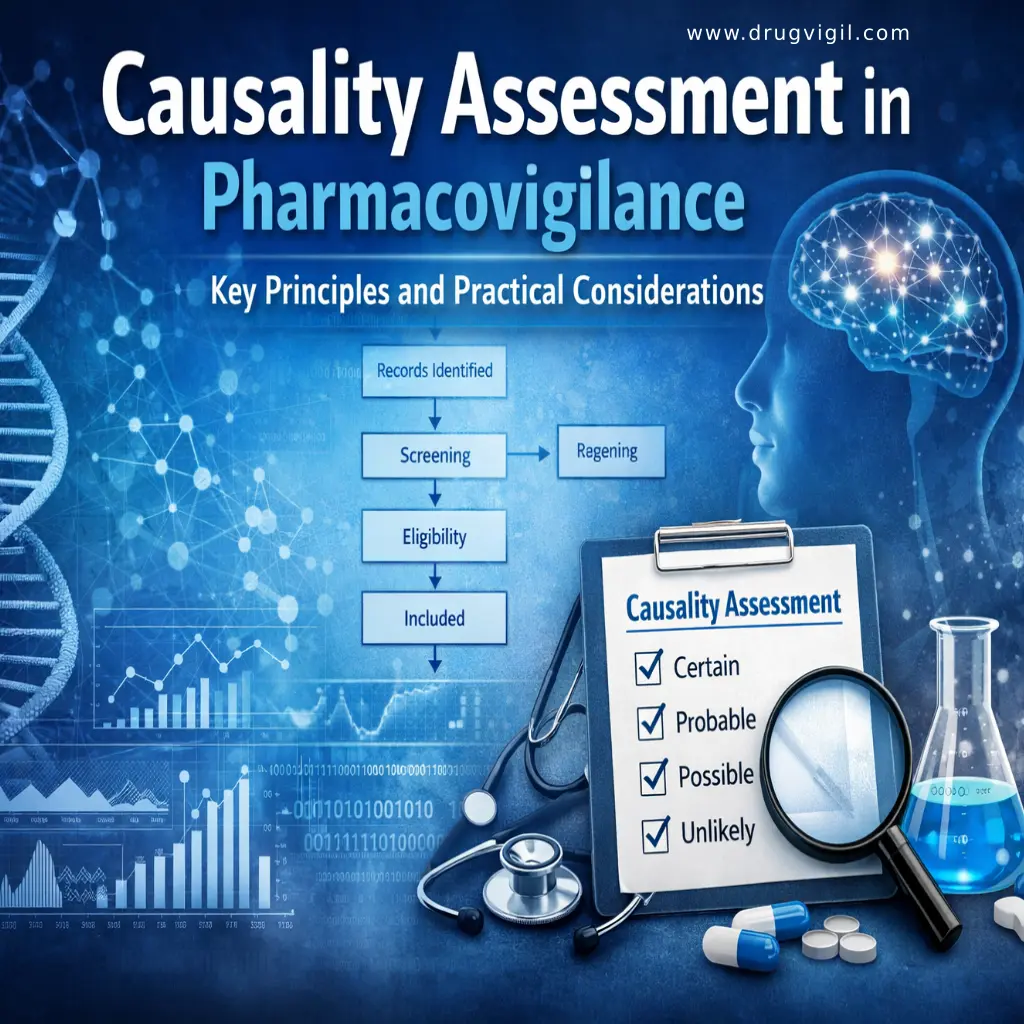
- The role of causality assessment in distinguishing SARs from SAEs.
- Seriousness criteria according to ICH E2A guidelines and their significance in case processing.
Introduction
Serious adverse events (SAEs) and serious adverse reactions (SARs) are critical concepts in pharmacovigilance and clinical safety monitoring. Although these terms are often used interchangeably, they differ in an important aspect that directly impacts case processing, reporting, and safety assessment.
The key distinction lies in the causal relationship with the medicinal product. Understanding this difference is essential for accurate safety evaluation and regulatory reporting. This article explains the fundamental differences between SAEs and SARs, along with their significance in clinical trials and pharmacovigilance practice.
SAE (Serious Adverse Event) vs SAR (Serious Adverse Reaction)
1. SAE – Serious Adverse Event
Definition:
A Serious Adverse Event (SAE) is any untoward medical occurrence that:
- Results in death
- Is life-threatening
- Requires hospitalization or prolongation of existing hospitalization
- Results in persistent or significant disability/incapacity
- Results in a congenital anomaly/birth defect
- Represents an important medical event
At this stage, a causal relationship between the event and the medicinal product has not been established.
Key Point:
An SAE may or may not be related to the medicinal product.
Example:
A patient participating in a clinical trial is hospitalized due to severe pneumonia. The event qualifies as an SAE because it requires hospitalization, regardless of whether it is caused by the study drug.
Another example is a patient who dies in a road traffic accident during a clinical trial. This is still classified as an SAE because it meets seriousness criteria, even though it is unlikely to be related to the medicinal product.
2. SAR – Serious Adverse Reaction
Definition:
A Serious Adverse Reaction (SAR) is a serious adverse event where there is a reasonable possibility of a causal relationship with the medicinal product.
Key Point:
A SAR is essentially a subset of SAEs in which the medicinal product is suspected to have contributed to the event.
Characteristics:
- Causality has been assessed
- The relationship to the drug cannot be excluded
- The investigator or assessor suspects drug involvement
Example:
A patient develops aplastic anemia two weeks after starting a new medicinal product, and the investigator considers the event possibly related to the drug. This would be classified as an SAR.
Similarly, if severe pneumonia is later determined to be caused by immunosuppression associated with the study drug, the SAE would subsequently be reclassified as an SAR.
Both SAEs and SARs must meet seriousness criteria; however, SARs additionally require a suspected causal relationship with the medicinal product.
Seriousness Criteria (ICH E2A)
An event or reaction is considered serious if it:
- Results in death
- Is life-threatening
- Requires inpatient hospitalization or prolongation of existing hospitalization
- Results in persistent or significant disability/incapacity
- Results in a congenital anomaly or birth defect
- Represents an important medical event based on medical judgment
“Understanding the difference between SAE and SAR is not just about terminology—it is about ensuring patient safety through accurate assessment and reporting.”
Practical impact on reporting:
| Scenario | Classification | Expedited? |
|---|---|---|
| SAE, causality unknown | Depends | |
| SAE, causality assessed — not related | SAE (not SAR) | Usually no, Based on protocol |
| SAE, causality assessed — Possibly related | Based on assessment, often times classified as SAR | Yes, if unexpected SUSAR |
| Post-marketing: unexpected serious suspected ADR | Serious ADR | Yes in 15 days (ICH E2B) |
Conclusion
Although Serious Adverse Events (SAEs) and Serious Adverse Reactions (SARs) may appear similar and share the same seriousness criteria, the critical difference lies in the assessment of causality. An SAE represents a serious medical occurrence regardless of its relationship to the medicinal product, whereas an SAR indicates that a reasonable possibility of drug-related causality has been established.
Understanding this distinction is essential in pharmacovigilance and clinical trial safety monitoring, as it directly influences case evaluation, reporting requirements, and regulatory decision-making. Accurate classification of SAEs and SARs helps ensure effective safety surveillance, timely risk assessment, and ultimately contributes to protecting patient safety.